You followed all the steps, used professional products, and are sure you did everything correctly. Yet… your lashes didn’t lift as much as you hoped.
Don’t worry, a lash lift with insufficient curl is not a failure, but rather a valuable opportunity to analyze your technique and improve.
In this article, we’ll cover all the reasons that can affect your lash curl and provide solutions to ensure perfect results every time.
10 Technical Mistakes That Can Compromise Lash Curl
Here are the most common reasons your lash lift may appear less visible and how to avoid them to achieve perfectly curled, uniform lashes:
1. Lashes Not Properly Cleaned
Cleansing is the foundation of every successful lash lift. Even invisible traces of makeup, sebum, or dead skin cells can prevent the lifting solution from working effectively.
Lashes must be completely free of impurities; otherwise, the lifting solution cannot penetrate the hair structure.
Tip: Use Cleansing Foam, a gentle yet effective pre-treatment cleanser. For even deeper cleaning, pair it with the Cleansing Brush, which cleans between even the thinnest lashes without stressing the skin or natural hairs.
Proper cleansing before the treatment is the first step to flawless results.
Note: Avoid waterproof mascara 48–72 hours before the treatment, and remove traditional mascara the day before.
2. Rod Too Large
A very common mistake is choosing a rod that is too big. If the rod size isn’t proportional to the natural lash length, the curl will be soft and barely visible.
Lashes should cover the rod perfectly, reaching just to the top edge. If they remain too flat, the rod is too large, switch to a smaller size for a more pronounced lift.
- Too small a rod = over-curled, unnatural effect
- Too large a rod = almost invisible curl
Tip: Always measure the lashes before choosing the rod. Generally:
- Large rods = soft, natural curl
- Small rods = more defined curl
- Most commonly used sizes: Small and Medium
If lashes are very stiff and lift poorly from a small rod, use medical tape to keep them in place.
3. Incorrect Rod Placement
Check for visible gaps between the rod and lash line—this signals poor adhesion. Always place the rod as close as possible to the lash line for a natural, harmonious lift.
Avoid placing the rod too low on the eyelid; this can create an abnormal “L” shape where lashes point downward before curling up.
4. Application of Solutions
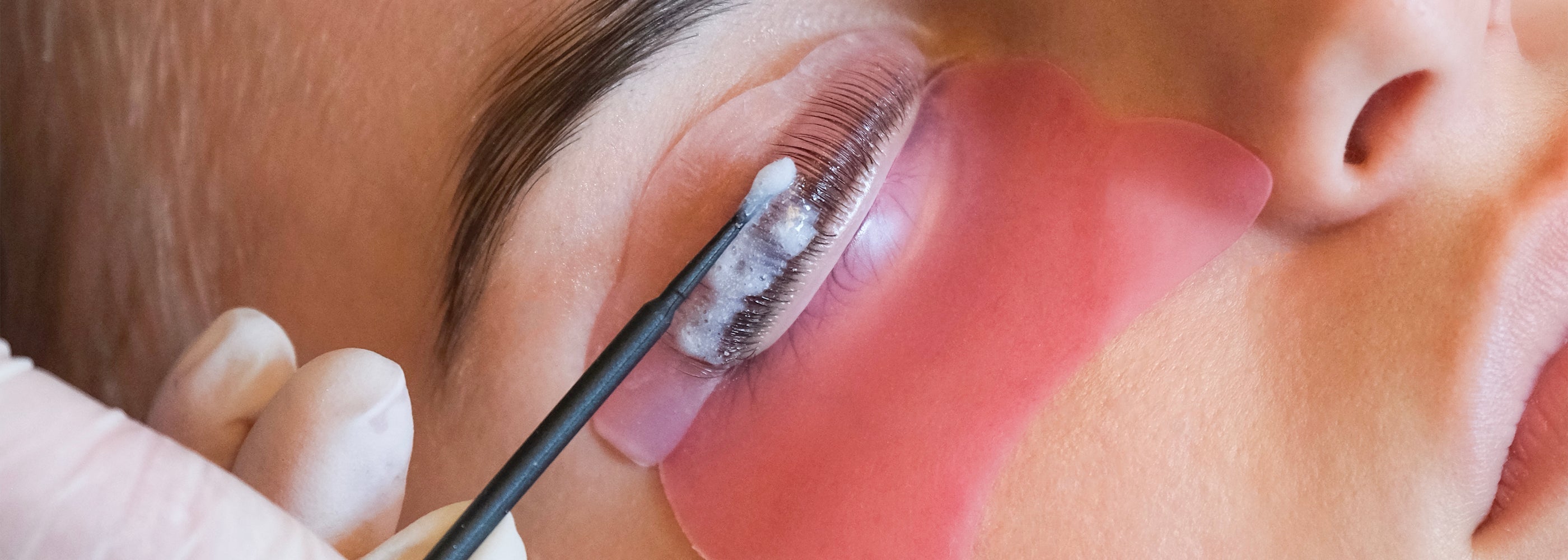
Applying the solution to the entire lash length is a critical error that can lead to over-processing, damage, and poor results. Lash lifting occurs at the root, not the tips.
Note: This applies to thioglycolic acid-based solutions; cysteamine-based solutions can be applied along the full length.
Apply the lifting solution only to the lower third of the lashes, from root to about 1/3 of the total length. The base determines the overall angle, so more product does not equal better results—it only increases the risk of damage.
5. Incorrect Timing
Even one minute can make a difference.
- Too short = solution cannot act fully → lashes remain almost straight
- Too long = lashes dry out and are damaged
Tip: Consider lash type:
- Thin lashes = shorter processing time
- Thick/stiff lashes = longer processing time
Always use a professional timer to monitor application time precisely.
6. Ignoring Lash Characteristics
Not all lashes respond the same. Thick, resistant, or very straight lashes need longer processing times than fine, soft lashes. A superficial assessment leads to disappointing results.
Take a few minutes to analyze thickness, texture, growth direction, and condition before starting. This allows you to customize the protocol for optimal results.
7. Expired or Poorly Stored Products
Expired or improperly stored lifting products lose efficacy and compromise results.
Always check:
- Product expiration date
- Date of opening (write it directly on the bottle or packet)
- PAO (Period After Opening)
Store products in a cool, dry place, and close them carefully after use to limit air exposure.
8. Excessive Adhesive
Too much adhesive can form a barrier between the lash and the lifting solution.
Apply only enough glue to fix the lashes, keeping them separate and well-aligned. Wait for it to dry before applying the solution. Avoid “suffocating” lashes with glue.
9. Damaged Lashes
Fragile, dry, or previously compromised lashes lack the structural integrity to hold the lift. Chemicals may damage them further instead of lifting.
For visibly damaged lashes, recommend a rest period with reconstructing serums like My Lamination® serums. Only after recovery should you proceed with the lift safely.
10. Post-Treatment Mistakes
Even a perfect lift can fail if post-treatment care is ignored.
Provide clients with clear instructions:
- Do not wet lashes for at least 24 hours
- Avoid sauna, swimming, makeup, oily products, and waterproof mascara
- Do not touch or rub freshly laminated lashes
Proper post-lamination care ensures long-lasting, perfect results.
In Summary
A lash lift with insufficient curl can result from:
- Improper cleansing
- Incorrect timing
- Wrong rod size or placement
- Poorly stored products
Analyzing each step helps identify where to improve for flawless lifts.
Key Tip from My Lamination®:
The secret to perfectly curled, healthy lashes is attention to every step, from cleansing to processing. Use professional products and tools like Cleansing Foam and Cleansing Brush for impeccable preparation and long-lasting results.
Investing in high-quality professional products is not a cost—it’s a guarantee of satisfied clients and excellent results.
Discover the full My Lamination® professional line for lash and brow lamination and transform every treatment into a perfect beauty experience.
Your professional reputation starts with the quality of what you use.