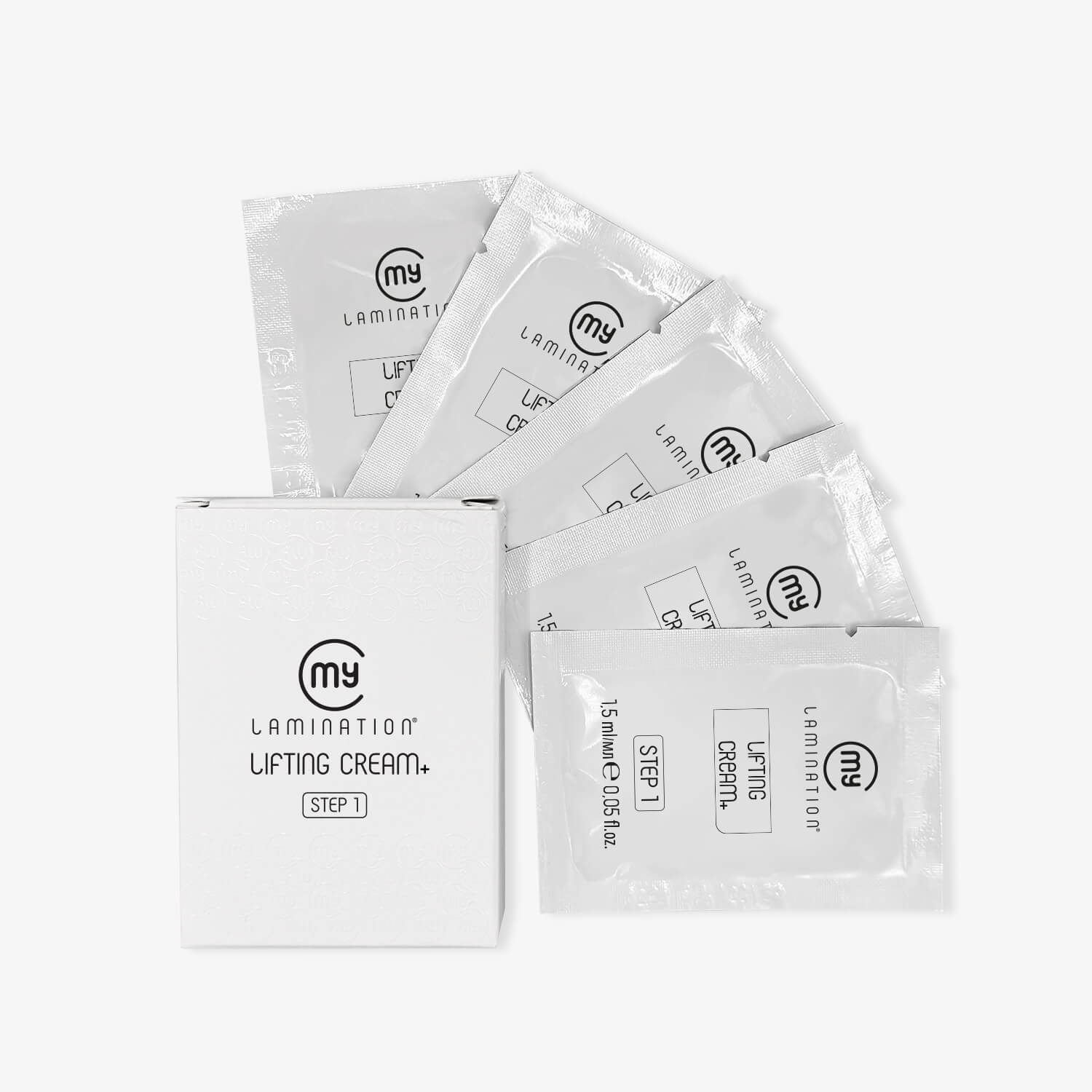
The professional beauty industry is constantly evolving, and as a lashmaker, lamimaker, or qualified esthetician, staying updated on the latest innovations is essential to offer clients cutting-edge treatments. Today we're talking about an ingredient that is transforming the way we think about lamination: cysteamine, the beating heart of the new Cysteamine Lift by My Lamination.
What is Cysteamine?
Cysteamine (or cysteamine hydrochloride) is an amino acid derivative naturally present in the human body. In the context of lash lamination, it acts as the main active ingredient to break and rebuild the disulfide bonds within the keratin structure of the hair, creating the lifting and curling effect we want to achieve.
Unlike traditional systems based on TGA (thioglycolic acid), cysteamine represents an alternative that works in synergy with the natural chemistry of the hair. Precisely because its composition corresponds to molecules already present in our body, it proves significantly more compatible with lashes and the delicate periocular area.
This characteristic makes it particularly suitable for clients with sensitive eyes and for those who desire a more delicate treatment.
What is TGA (Thioglycolic Acid)
Before diving deeper into the differences, it's important to understand what TGA is. Thioglycolic acid (often in the form of ammonium thioglycolate) has been the absolute protagonist in lash lamination solutions for years. It works by rapidly breaking the disulfide bonds in the hair shaft, allowing the lashes to be reshaped and lifted.
Differences Between TGA and Cysteamine
The fundamental differences between these two systems go beyond the simple active ingredient:
Mode of action: Both break disulfide bonds, but cysteamine generally operates at more moderate pH intervals, with a gentler sensory experience compared to traditional thioglycolates.
Application area: One crucial difference is that cysteamine-based solutions can be applied along the entire length of the lashes. TGA-based products, on the other hand, must be applied only up to a maximum of 80% of the length, avoiding the tips.
Sensory experience: Cysteamine, while having a characteristic sulfurous odor, tends to be less bothersome during application. Most clients do not report discomfort during treatment.
Post-treatment results: TGA-based systems can leave lashes drier, requiring careful post-treatment care. Cysteamine, thanks to the possibility of incorporating nourishing ingredients into the formula, leaves lashes soft, hydrated, and luminous.
Advantages and Disadvantages
Advantages of Cysteamine:
More delicate formula, ideal for clients with sensitivity
Application along the entire length of the hair
Lower risk of dryness and dehydration
Leaves hair soft, elastic, and with a natural appearance
Disadvantages to consider:
Generally longer processing times compared to TGA (the Cysteamine Lift by My Lamination has only 1 minute more of processing time while maintaining the same effectiveness)
Characteristic sulfurous odor, although more tolerable
Still requires professional attention to avoid overtreatment
Advantages of TGA:
Quick processing times
Effective on thick lashes
Disadvantages of TGA:
Higher risk of damage if applied by non-professionals
Can dry out the lashes
Limited application to avoid the tips
Requires experience
The choice between cysteamine and thioglycolate is not a question of "better or worse" in absolute terms, but of the right tool for the right client. Having both options in your beauty center allows you to personalize the treatment based on the initial assessment.
Lash Lamination with Cysteamine
The lamination process with Cysteamine Lift follows the classic steps of the treatment, but with some particularities that make it an enhanced experience:
Consultation and assessment: As always, begin with an accurate analysis of the client's lashes, the desired result, and any sensitivities. The consultation is the moment to explain the specific advantages of the cysteamine-based formula.
Patch test: Always have clients perform a patch test at least 24-48 hours before the complete treatment, done by their doctor or dermatologist of reference. The sensitive skin around the eyes can react quickly, so this step should never be skipped.
Application of Cysteamine Lift: Unlike TGA-based products, you can apply the solution along the entire length of the lashes, without concerns. My Lamination recommends avoiding contact with the lash line; furthermore, the product on the tips does not increase the curvature.
Processing times: Carefully monitor the times based on lash texture. Overtreatment is still possible if the product is left on for too long.
Final result: The complete treatment takes about 45-60 minutes and offers a natural lift, more curved lashes that are beautifully separated and appear longer to the eye. Results last up to 8 weeks, depending on the client's natural regrowth cycle and post-treatment care.
Safety and Treatment Duration Considerations
Is It Safer?
The question many professionals ask is legitimate: is cysteamine safer than thioglycolate? The most accurate answer is that cysteamine is generally more tolerable for many types of lashes and operates at a tendentially more moderate pH. However, both molecules are reducing agents and, if not used correctly, can damage the fiber or cause irritation or swelling.
True safety depends on three factors: the quality of the product, the application protocol, and the competence of the lamimaker. Cysteamine offers a greater "margin of error," making it ideal for those who are starting to work on lashes.
Duration of Results
Many wonder which system offers longer-lasting results. In reality, both cysteamine and TGA can offer comparable durations (up to 8 weeks) when the protocol is performed correctly. The actual duration depends on:
Natural lash cycle: each client has a personal regrowth rhythm
Post-treatment care: use of nourishing serums, avoiding rubbing and oily products
Initial lash health: healthy lashes maintain the lift longer
Product quality: stable formula and quality ingredients make the difference
Application technique: precision in timing and positioning is essential
Professional Precautions
Even when working with cysteamine, always maintain high safety standards:
For professional use only by qualified estheticians and lamimakers
Avoid direct contact with the eyes; in case of contact, rinse immediately with plenty of water
Assess client suitability: certain eye conditions or particular sensitivities could make the person unsuitable
Adequate training: even if more tolerant, cysteamine requires knowledge of the product and proper techniques
Why Add This Treatment to Your Beauty Services
Integrating Korean Lamination with Cysteamine Lift into your treatment menu is not just following a trend, but concretely responding to the needs of an evolving market. Here's why it represents a strategic investment for your beauty center:
Competitive differentiation: Offering an innovative alternative positions you as a professional who is up-to-date and attentive to the latest technologies. It's a point of difference that attracts clients eager to try the latest novelties in the sector.
Expanding the target audience: The gentleness of the formula opens the door to clients who have so far avoided lamination due to fears of sensitivity or damage. Clients with sensitive eyes or simply more attentive to the health of their lashes will find this treatment to be the ideal solution.
Excellent results with greater peace of mind: The ability to apply the product over the entire lash makes the treatment more manageable, reducing stress during application and increasing client satisfaction. My Lamination recommends distributing the product starting 1-2mm from the lash line.
Efficiency and speed: Once you've gained confidence with the product, you'll be able to optimize treatment times, maximizing client turnover without compromising quality.
Korean technique: Combining cysteamine with the Korean lamination technique offers the best of both worlds: the impressive lift that clients love, while simultaneously supporting the strength and health of the lashes.
Authentic Made in Italy: By choosing My Lamination, you offer your clients products made in Italy, synonymous with quality, safety, and effectiveness. An added value that communicates professionalism and attention to detail.
The Future of Lamination
Lamination with cysteamine is not a passing trend, but a true evolution that places hair health at the center of aesthetic treatment. This innovative approach perfectly responds to the needs of modern clients: effective, safe treatments that respect the natural structure.
As industry professionals, having both TGA-based systems (for clients with thick lashes that require very pronounced results) and cysteamine (for a more delicate approach) available allows you to personalize every treatment, maximize results, and build client loyalty.
Cysteamine Lift by My Lamination represents the perfect balance between scientific innovation and practical applicability: an advanced formula that reintegrates nourishing elements during the lifting process.
Are you ready to revolutionize your lamination treatments? Discover Cysteamine Lift and the various Korean Lamination techniques by My Lamination to offer your clients the excellence of a delicate, effective, and Made in Italy formula. The future of lash lamination is here, and it's gentler than ever.
Apprendre encore plus